


Wigmaster, Wigmaker, or Wig Seller? Why the Words We Use Are Failing the Industry
I have been thinking about a conversation I had recently with a celebrity hairstylist. We were talking about a subject that comes up more and more among serious professionals: the growing gap between what clients think they are buying and what the industry is actually delivering. It is not a simple story of fraud or incompetence. It is a structural problem that begins with language.

A Title That No Longer Means What It Once Did
When I entered this profession, the word wigmaker described something precise. It described an artisan who operated in a tradition that had changed little over centuries, closer in philosophy to Haute Couture than to retail.
The process was exacting by design: a consultation, hair selection based on colour, texture, and length, full head measurements and where appropriate a head cast, cap construction built specifically to that client's anatomy, hair preparation, and the knotting of individual hairs into the foundation. Then fittings, adjustments, and refinements until the work was right. The client's measurements and head cast were kept on record. Every element was bespoke, because there was no other way to do it properly. These were the foundational skills of a wigmaker, but there are many others beyond them.
This is what I now call a wigmaster: a master of a craft that takes years to develop through apprenticeship and accumulated experience, not months through a course or a kit. The skills are not interchangeable, and the knowledge is not transferable through shortcuts.

Today, the word wigmaker also covers an entirely different range of activity. It includes wig repairers. It includes assemblers who combine lace tops with machine-made wefts on pre-constructed caps, which is skilled work, but categorically different from creating a fully ventilated custom wig from scratch. Some of these professionals have no training in hair preparation, no experience with cap construction from the foundation up, and no background in the kind of bespoke process the word wigmaker once implied.
None of this is inherently wrong. These are legitimate services with their own value. But using the same word for all of it has consequences, and those consequences are becoming more visible in the current market.
When Price Becomes the Product
One of the more notable trends on Instagram right now is wig companies posting their prices as though the number itself is the point. A wig listed at $20,000, displayed like a luxury handbag, with the cost front and centre. The implied message is that price is proof of quality. It is a borrowed strategy. Luxury brands have long understood that aspiration is its own product, and that some clients are not simply buying an object but buying a signal. For established houses with decades of craft heritage behind them, this is a legitimate conversation. The price reflects something real: materials, labour, expertise, and provenance. It does not need to be overtly justified.
When that same strategy is adopted by businesses whose work does not carry the same foundation, however, a gap opens. The client pays for the dream and receives something that cannot deliver what the signal promised. Because they had no vocabulary to evaluate the difference before purchasing, they have no framework to understand why the result disappointed them.
This problem has become more visible as the market itself has grown. Grand View Research estimates the global hair wigs and extensions market at USD 15.22 billion in 2025, rising to USD 16.41 billion in 2026, with projected growth to USD 31.13 billion by 2033. In a market expanding at that scale, premium signals become more commercially powerful, but also easier to imitate.
This connects to what luxury research has consistently found: trust, once broken by a mismatch between perceived and delivered value, is not easily rebuilt. The client does not return. And when they share their experience, they often lack the language to explain what actually went wrong, which creates confusion about the category as a whole.
The Supply Chain the Client Cannot See
The expansion of the wig industry over the past four years has happened in parallel with the dramatic growth of the hair extension market. Both draw from the same pool of raw material. And the material at the premium end of that pool, long, fine, colour-consistent, unprocessed hair in rare shades, is finite in ways the market has not adequately communicated to the people generating the demand.
This is not a small niche. Recent market estimates place the global hair extensions segment at USD 3.43 billion in 2025, up from USD 3.25 billion in 2024, with continued growth expected. Grand View Research also reports that human hair represented 65.6% of revenue in the broader wigs and extensions market in 2025, reflecting how strongly premium pricing is tied to natural hair products.
Consider a client who wants 22 to 30 inches of light blond virgin hair, double drawn, for a custom wig or extension service. It is not an unreasonable request, and it is also one of the most difficult specifications in the industry to fulfil honestly. Hair of this length, colour, and quality exists in very limited supply globally. The wig and extension industries are now competing for the same strands, and that competition has a direct effect on price. When honestly quoted, that price frequently exceeds what the client expected or is willing to pay.
What happens next follows a familiar pattern.
The client declines the honest price and finds a supplier offering what appears to be the same specification at a fraction of the cost. What they are often receiving is quality processed hair, bleached, toned, and treated, sometimes sold as virgin. It can look exceptional and feel convincing at purchase. But it will not perform the same way over time, and it will not respond to further processing the way unprocessed hair does. The client then complains. Sometimes they have been genuinely misled. In other cases, they made a trade-off they did not realise they were making, guided by a price point they themselves had set.

What Transparency Actually Looks Like
The hairstylists, wigmasters, and professionals I work with share a common practice that sets them apart from what I have described above. They educate their clients before the transaction, not after the disappointment. They explain what a specific hair specification actually costs and why. They discuss what is achievable within a given investment and what is not. They do not tell the client what they want to hear; they tell the client what they need to know. This is not a sales approach. It is a professional standard, and it produces something the other model cannot: a client who understands the value of what they purchased, whose expectations align with reality, and who returns.
The Question Worth Asking
The industry is not going to reverse its expansion. Demand for wigs and extensions will likely continue to grow. More people will enter the market offering services under titles they may not have fully earned, and more clients will make purchasing decisions based on price signals they have not been given the tools to interpret. What the industry can do is reclaim its language. A wigmaster is not the same as a wigmaker, and a wigmaker is not the same as a wig assembler or a wig repairer. These are honest distinctions, not hierarchical judgements. Each role serves a different need. But allowing the terms to blur, in marketing, in social media, and in everyday professional conversation, is what lets the gap between expectation and reality widen without anyone being held accountable for it.
The clients who care about quality deserve the vocabulary to find it. The professionals who have built their careers on genuine mastery deserve the recognition their expertise has earned. And the industry, if it is serious about its own future, might benefit from being more precise about what those words have always meant.
Beth Thompson is the founder of Lux Symbolica, a Paris-based B2B rare hair curation and sourcing service operating at the intersection of professional expertise, forensic science standards, and the luxury supply chain.
Professional enquiries by authorization only.
© 2026 Lux Symbolica SASU
Endnotes
Grand View Research, “Hair Wigs And Extensions Market Size | Industry Report, 2033.” The report states the global hair wigs and extensions market was estimated at USD 15.22 billion in 2025, projected to reach USD 16.41 billion in 2026 and USD 31.13 billion by 2033. It also states that human hair accounted for 65.6% of revenue in 2025.
Research and Markets summary reported by Yahoo Finance, “Hair Extensions Industry Worth $3.43 Billion in 2025.” The report summary states the hair extensions market grew from USD 3.25 billion in 2024 to USD 3.43 billion in 2025.
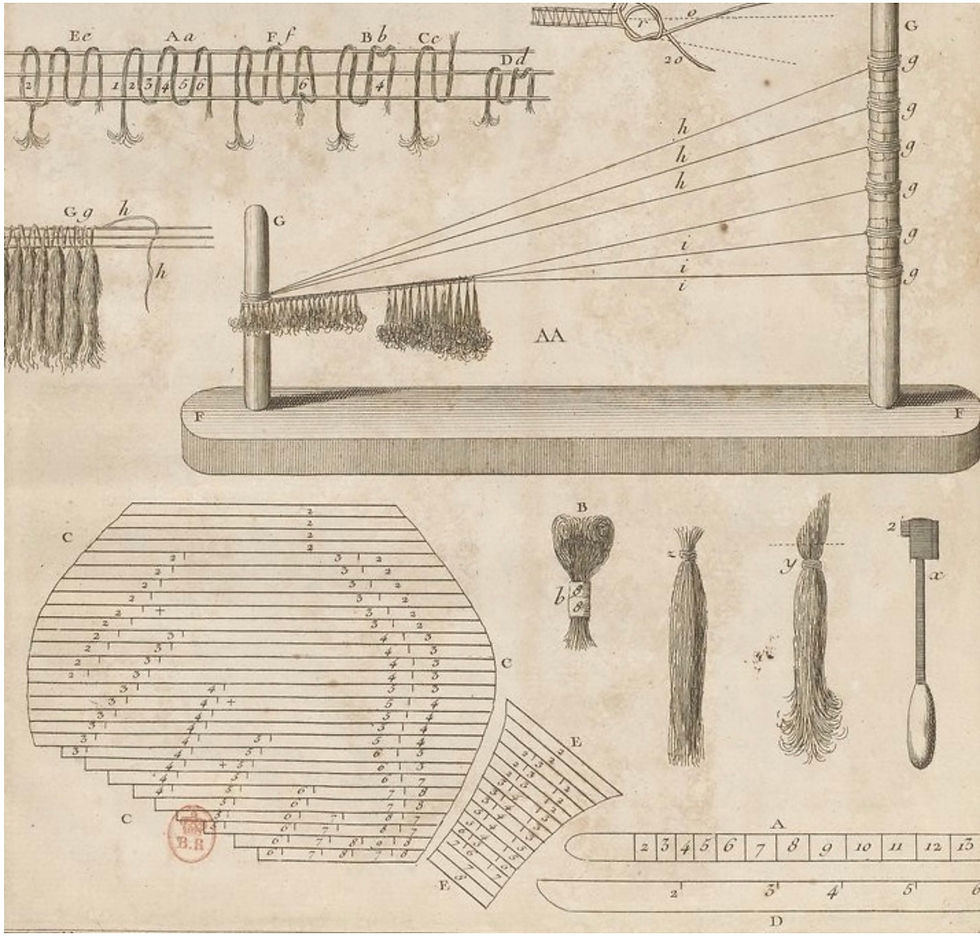
Art du perruquier, in the series of Descriptions des Arts et Métiers, faites ou approuvées par messieurs de l'Académie Royale des Sciences , 1761
https://libraries.mit.edu/exhibits/diderots-encyclopedia-exhibit-preview/wigmaking/


Comments